Tuesday, October 15, 2019

Top 10 Waterfalls

Waterfalls are some of the most beautiful sights in nature. There's something about the sound of the water, rushing and cascading continuously down a mountainside, that is very soothing, uplifting, and awe-inspiring.

Our National Parks are full of amazing and gorgeous waterfalls. They are usually great rewards at the end of a hike, but some are found right along the road.

I have decided to rank the Top 10 Waterfalls that we have seen in our National Parks.

First, an honorable mention:

Twin Falls, Glacier NP


There are more famous falls in Glacier, but I really enjoyed going out to see this pair of falls in this pristine wilderness. These falls are located in the Two Medicine Lake region of the park. Take the ferryboat across the lake and then it's a short mile-hike to these falls.

And now, the Top 10:

#10. Bridalveil Falls, Yosemite NP
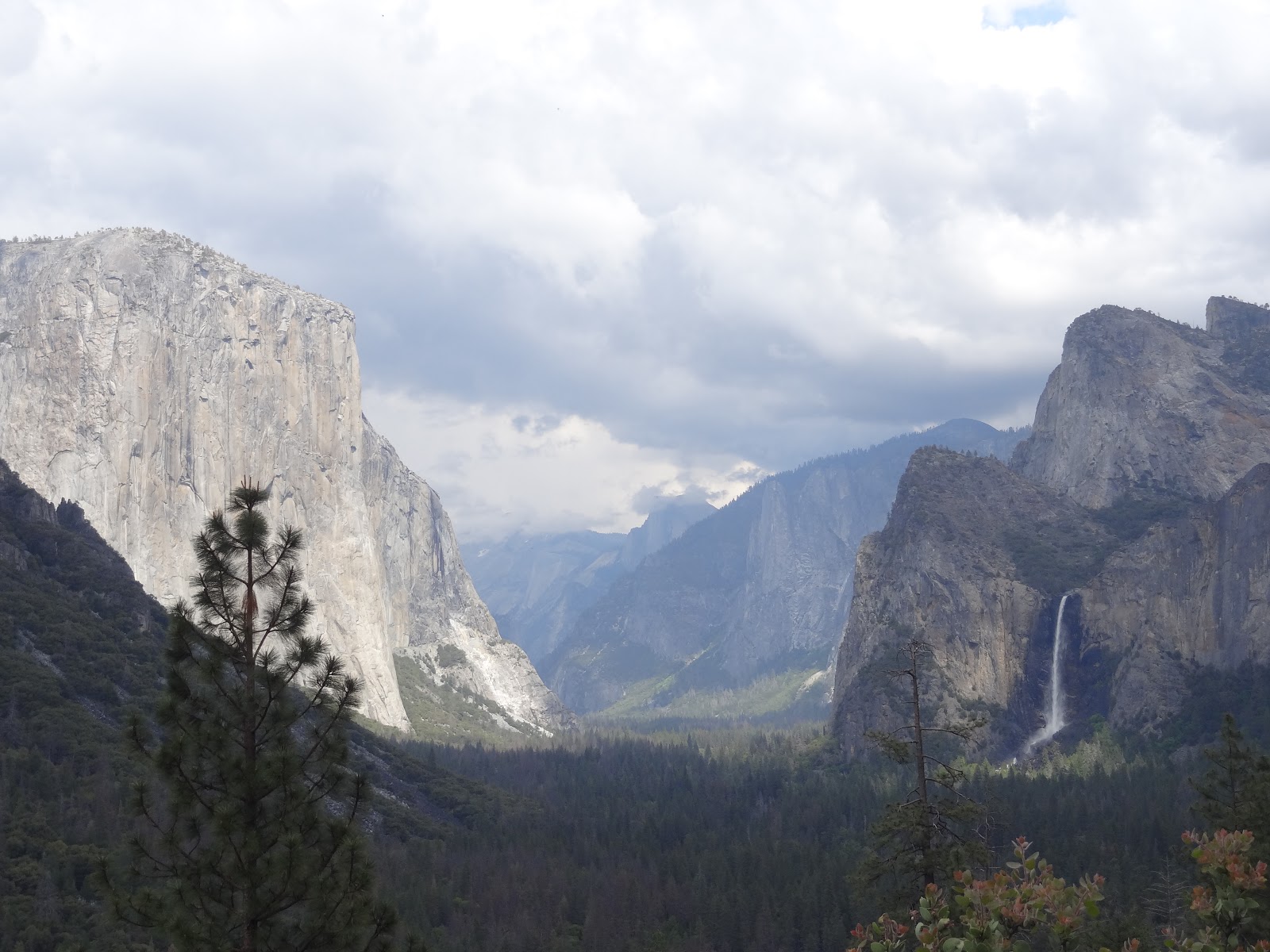


This spectacular falls plunges 617 ft into the Yosemite Valley, and is usually the first stop for any visit to Yosemite, as it is featured prominently in the famous "Tunnel View." Make sure to see the falls from this spot and then take the pull-out further down the road to walk up to the base of the falls. Depending on the month, the falls can get pretty dry but it does run year round. You will certainly get wet from the spray and mist if you visit the base of the falls.

#9. Abrams Falls, Great Smoky Mountains NP


Certainly not as tall and impressive as Bridalveil, but Abrams Falls at Great Smoky Mountains is a beautiful destination at the end of a fun, 2.5 mile hike in the Cades Cove region of the park.

#8. Dark Hollow Falls, Shenandoah NP

One of the most popular stops along Skyline Drive, take the short (but steep) 1.5 mile hike to Dark Hollow Trails. It was a bit crowded, but it's a very scenic hike and falls.

#7. Myrtle Falls, Mt. Rainier NP


This 72-foot fall is the first landmark along the full loop of the Skyline Trail at Paradise Region of Mt. Rainier. The mountain provides the perfect backdrop to this picturesque falls.

#6. Marymere Falls, Olympic NP


This 90 ft waterfall in the rain-forest of the Olympic Peninsula is an absolute jewel. The trailhead is along Lake Crescent, and it's a short easy 1-mile hike to the falls.

#5. Alberta Falls, Rocky Mountain NP


When we visited Alberta Falls in July 2015, it was a raging cascade. From the Glacier Gorge trailhead, it's only about a mile to the falls. This is a popular destination, and for good reason. It's a very dramatic, impressive falls, and you can easily get real up close and personal with it (at the base AND at the top). It's only a 30 ft drop, but it is thunderous and thrilling.

#4. Sol Duc Falls, Olympic NP


This unique, three-pronged falls is one of the best views in all of Olympic NP (and that's saying something). Once again, it's only about a 1 mile hike to this stunning drop. 

#3. Nevada Falls/Vernal Falls, Yosemite NP


So, I'm kind of cheating with this one and grouping Vernal Falls (the lower one on the left) and Nevada Falls (the upper one on the right). Tara and I also haven't had the chance yet to hike up to these massive and amazing falls. Vernal Falls is 317 ft tall, and Nevada is 594 ft! These falls are gigantic. I have only seen these falls from Glacier Point and I can't wait to go back to Yosemite and get up close to these spectacular drops.

#2. Yosemite Falls, Yosemite NP

from Glacier Point


from the valley road


lower falls

Yosemite is an embarrassment of riches when it comes to waterfalls. Combining the upper and lower falls, Yosemite Falls, at 2,425 ft, is the tallest waterfall in all of North America. At the base, you'll strain your neck trying to get the whole thing in one view. See the majesty of Yosemite Falls from Glacier Point. It will take your breath away.

#1. Yellowstone Falls, Yellowstone NP

Upper Falls

Lower Falls at Uncle Tom's Trail

Lower Falls from Artist's Point


brink of the Upper Falls


Lower Falls in Winter - Oct 2019
The Grand Canyon of the Yellowstone is home to the absolutely stunning Yellowstone Falls, the Upper Falls (109 ft) and the Lower Falls (308 ft) create one of the most beautiful sights in all of our National Parks. I may be a bit biased because it's a place that Tara and I have gone to several times, including just last weekend for my first experience of Yellowstone in the snow. Which was amazing, it was like visiting an entire new park!

Anyway, make sure to head over to Canyon Village and take the North Rim and the South Rim roads to experience and view these falls from multiple angles. The most popular place to view the falls is at Artist's Point, but all the overlooks around here are worth visiting.

Wednesday, August 28, 2019

Bear Paw National Battlefield

Visited: May 2016
Nearby town: Chinook, MT

"I am tired of fighting. Our chiefs are killed. Looking Glass is dead. Toohoolhoolzote is dead. The old men are all dead. It is the young men who say 'Yes' or 'No' He who led the young men is dead. It is cold, and we have no blankets. The little children are freezing to death. My people, some of them, have run away to the hills, and have no blankets, no food. No one knows where they are - perhaps freezing to death. I want to have time to look for my children, and see how many of them I can find. Maybe I shall find them among the dead. Hear me, my chiefs! I am tired. My heart is sick and sad.

From where the sun now stands I will fight no more forever."

-Chief Joseph, surrendering his rifle to Col. Nelson Miles on October 5, 1877

On the lonely windswept plains of north-central Montana, just north of the stunning Bear Paw Mountains, is the site of the last battle of the Nez Perce War. It was here that Chief Joseph, after suffering heavy losses after a seige, and at the end of a fighting retreat of 1,170 miles, that the Nez Perce surrendered to the U.S. Army, a mere forty miles from freedom.

In the last blogpost, I detailed our visit of Big Hole Battlefield, and the background and story of the Nez Perce War. Instead of repeating that history, here is the link to that post: https://paulnationalparks.blogspot.com/2019/08/big-hole-national-battlefield.html 

Once the Nez Perce managed to escape the Big Hole Basin, after the bloody battle there, the Nez Perce headed east across the Continental Divide, back into Idaho, and eventually into Yellowstone National Park. At that time, the National Park was only about 5 years old. During their journey east, Gen. Howard continued to pursue the Nez Perce, and skirmishes broke out at Birch Creek and Camas Meadows. The Nez Perce had hostile encounters as well with tourists and prospectors in Yellowstone Park boundaries.

Finally, the Nez Perce came in contact with the Crow Tribe east of Yellowstone. Chief Joseph and the Nez Perce were hoping that they would find refuge with and ally with the Crow against the U.S. Army. The Crow, facing pressure from the army and not wishing to destroy their relationship with the US, had no interest in assisting the Nez Perce and rebuffed their request.

Chief Joseph made a quick decision. The band would turn north and head for Canada. There they would team up with Sitting Bull and the Lakota. Sitting Bull had fled to Canada in the aftermath of the US defeat at the Battle of Little Bighorn (Custer's Last Stand) the year prior and had found asylum there.

The plight of the Nez Perce had generated sympathy for them among whites, even among some members of the US Army, but head General William Tecumseh Sherman was determined to not allow the Nez Perce to reach Canada and form an alliance with Sitting Bull and the Lakota. Sherman was also determined to severely punish the Nez Perce and make an example of them, lest any other tribes might be inspired to mount a rebellion.

Thus, General Howard called on Col. Nelson Miles, stationed at Ft. Keogh along the Yellowstone River, to lead a company of men to the northwest and intercept the Nez Perce, blocking them from entering Canada.

The Nez Perce were badly in need of supplies as they headed north, and as winter approached, were in bad shape. They rushed toward Canada as fast as they could, but a minor skirmish with 50 soldiers and civilian volunteers at Cow Island Landing (a common steamboat stop on the Missouri River) slowed them down. The Nez Perce killed 5 men and were able to get a bounty of much-needed supplies and food. However, the battle slowed them down for nearly two days, and allowed Col. Miles to catch up to the fleeing band.

On Sept 29, an early snow halted the Nez Perce at Snake Creek, just north of the Bear Paw Mountains and only 42 miles from the Canadian border. The Nez Perce camped there to wait out the snow. The Nez Perce were unaware of Col. Miles's approach. Although there were reports of a large number of men to their east, Looking Glass assumed that the men must be other Indians and the band decided to stay at Snake Creek.

It was a fateful decision, because the reported men were indeed the company of Col. Miles. On Sept 30, the Army attacked the Nez Perce on their north flank. The battle had begun. Col. Miles was able to drive off many of the Nez Perce horses, however, the Nez Perce were able to stage an effective counterattack. At the end of the day, the US Army had suffered 18 dead and 48 wounded. The Nez Perce lost 22 men. Col. Miles later commented that "the fight was the most fierce of any Indian engagement I had ever been in ... the whole Nez Perce movement is unequalled in the history of Indian Warfare."

the battlefield


The night of Sept 30 brought another heavy snowfall, allowing both the US Army and Nez Perce to fortify their positions. The US Army was reluctant to attack the Nez Perce fortification, because it was so well defended. However, there was no way the Nez Perce could move from their position, and the Army was much better supplied than the Nez Perce. The Army could simply lay siege and hold out longer. What's more, General Howard arrived at the battlefield on October 4, providing much needed supplies and reinforcements for the Army.

The Nez Perce were divided on what to do, many of its leaders had died in the battle. Only Chief Joseph and White Bird were left. Joseph was leaning toward surrender, he later remarked "We could have escaped Bear Paw Mountain if we left our wounded, old women, and children behind. We were unwilling to do this." White Bird was adamantly against surrender and wished to try to get to Canada.

On the morning of October 5, Gen. Howard had two old Nez Perce recruits accompanying his army approach the band and negotiate terms of surrender. Howard (through the recruits) promised that the Nez Perce would not be executed, they would be given blankets and food, and would be taken back to the smaller 1863 Reservation in Lapwai, Idaho. With those promises, Chief Joseph agreed to surrender, with White Bird apparently conceding to surrender as well.

However, before the surrender was official, White Bird and some 50 followers were able to slip through enemy lines and escape to Canada, hoping to join with other Nez Perce who had escaped during the battle and fled north as well. Some of the escaping Nez Perce were captured or killed, but about 100, including White Bird, did eventually make it to Canada and lived the remainder of their lives in Pincher Creek, Alberta.

Chief Joseph and the remaining Nez Perce officially surrendered on Oct 5, 1877 at 2:20 pm. He handed his rifle to Col. Miles and gave his famous "I will fight no more forever" speech. In total, the number of Nez Perce who surrendered (or were captured) was 431: 79 men, 178 women, and 174 children.

The Bear Paw Battlefield is preserved and managed as a unit of the larger Nez Perce National Historical Park. It's a few miles south of the small town of Chinook, MT. There is a short trail and a number of informational signs, detailing and describing the battle.
Plaque memorializing the surrender. See the next picture for close-up


these rocks allegedly mark the exact spot where Chief Joseph surrendered his rifle to Col. Miles and delivered his famous "I will fight no more forever" speech


As one final injustice, General William Tecumseh Sherman overruled the promises made by Howard and Miles to Chief Joseph as terms of surrender. The Nez Perce were not returned to Lapwai, but instead were sent to the military installation of Fort Leavenworth, Kansas. The living conditions of the Nez Perce at Fort Leavenworth were dismal. Finally, in 1885, nearly 8 years after their surrender, the Nez Perce were allowed to return to the Pacific Northwest, but not to the Lapwai Reservation with the rest of the Nez Perce. Chief Joseph's band were instead sent to live on the Colville Indian Reservation, in northeastern Washington. Chief Joseph died in 1904, at the age of 64, still in exile and never having been allowed to return to see his homeland in the Wallowa River Valley.

For more info: https://www.nps.gov/nepe/planyourvisit/visit-bear-paw-battlefield.htm