Wednesday, January 15, 2020

Mojave National Preserve

Visited: Nov 2016
Nearby town: Las Vegas, NV; Baker, CA

On our drive down to Joshua Tree National Park, we exited the Interstate south of Las Vegas to take the back roads and take the scenic route through Mojave National Preserve.

I hesitated to do a post on the Preserve, because we merely drove through the Park and did not stay long at all. However, Mojave National Preserve is a unit managed and administered by the National Park Service. And this blog not only records our visits to National Parks, but also visits to other NPS units. Therefore, a post dedicated to this visit is appropriate. Just keep in mind, this won't be a long one. 😊

So, what is a National Preserve? The NPS manages National Parks, Monuments, Memorials, Historical Sites, etc. but I believe this will be the first post chronicling a visit to a Preserve. A Preserve is similar to a National Park in that it is set aside and protected for conservation purposes, however, unlike a National Park, a Preserve usually does permit certain natural resource-extractive activities such as fishing, hunting, mining, and oil/gas exploration and extraction. The legislation creating a Preserve can place certain limitations on those activities, but it is generally permitted.

There are 19 National Preserves in the US. 10 are stand-alone official units of the NPS, and the rest are distinct areas within a larger National Park or Monument.

Mojave National Preserve was created in 1994 and covers a large area of San Bernardino County, California. At over 1.5 million acres, it is the third largest NPS unit in the Lower 48.

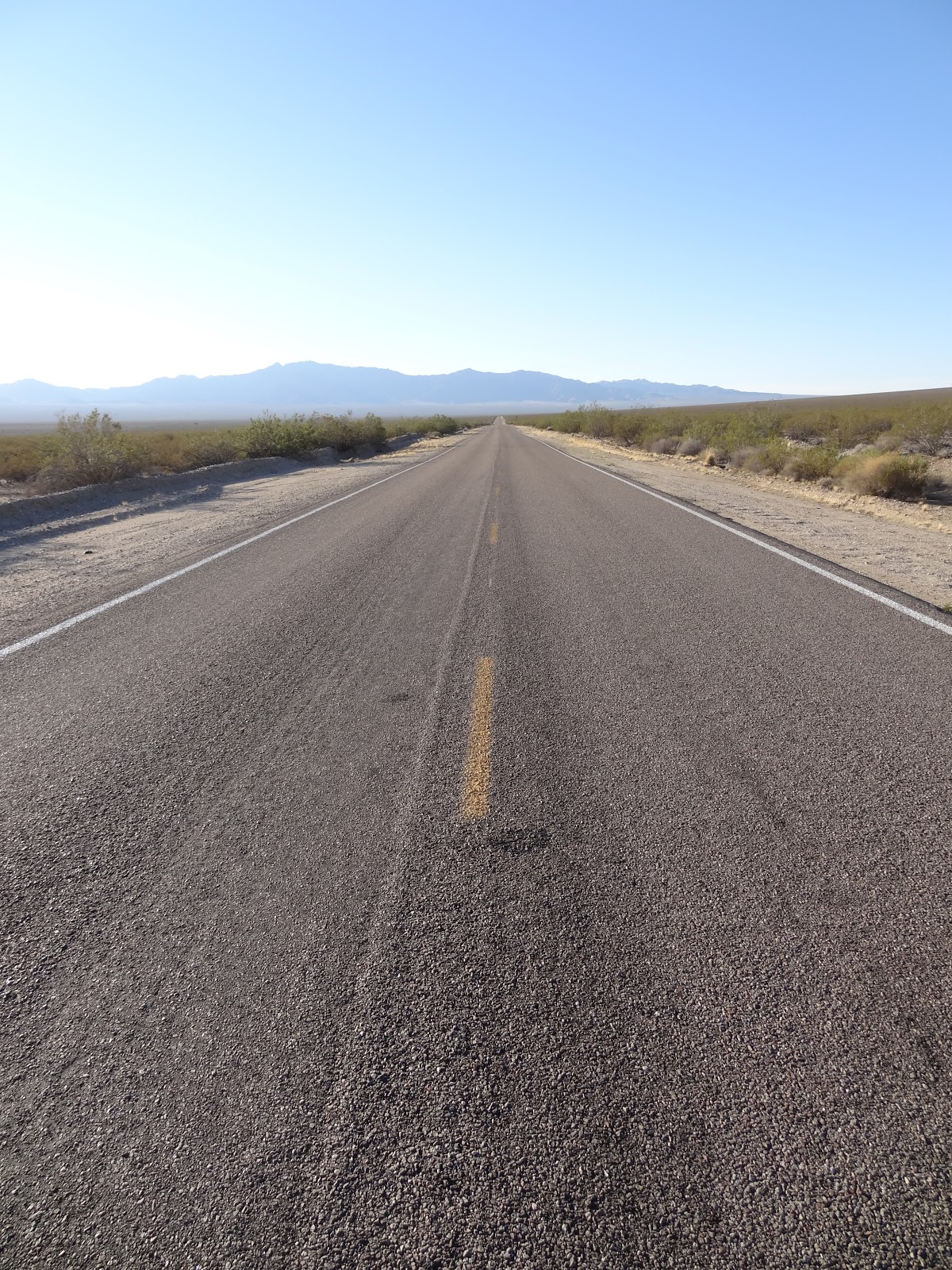
We took the road that goes through the center of the Preserve. Talk about lonely roads, if you want to go out into the desert and feel like the last man on earth, Mojave National Preserve is the place to be!

Eventually you'll reach the settlement designated as Cima. Here you will find the largest Joshua Tree forest in the world. I really regret that we didn't stop to take some pictures. It was amazing and impressive to drive through the Joshua Trees in this location. The forest in Cima was bigger and thicker than any of the Joshua Tree forests you find in the National Park.

Your next stop is the ghost town of Kelso. I love ghost towns. Kelso has an old train depot that now serves as the Preserve Visitor Center.
the Kelso Jail


this beautifully maintained train depot is now the Visitor Center


Kelso was built in 1905 specifically to be a train stop on the route between Los Angeles and Salt Lake City, Utah. When some borax and iron mines opened nearby, the town's population grew to over 2,000 in the 1940s. The mines folded after about 10 years, and the town quietly faded away. The depot remained in operation until 1986. The NPS renovated the depot in 2005 and it has served as the Visitor Center since that time. 

Further down the road, we saw the Kelso Dunes.

Another section of the Preserve contains the volcanic formations of Hole-in-the-Wall and the Cinder Cone Lava Beds. However, we did not visit that part of the Preserve.

Just south of the Preserve is another cool ghost town of Amboy. It might not technically be a ghost town, but it's pretty close. As of the 2000 census, the town's population is 4. Like Kelso, Amboy was founded as a railway stop. And the town boomed when Route 66 opened in 1926. It was the only town for miles and miles as people trekked through the remote desert heading for a better life in the West. Amboy quickly became a popular stop along Route 66.

However in 1973, Interstate-40 opened and bypassed Amboy. Not too many folks ventured off the freeway and the town slowly died. However, 10 buildings are still preserved. Including the famous Roy's Motel and Cafe. I love retro buildings like this, especially the glorious sign. It's pure Americana.
Roy's opened in 1938. The sign was built in 1959.


The Amboy Crater, an extinct cinder cone volcano

The Amboy School remained in operation until 1999, when the last students moved away

If you find yourself driving through this lonely corner of California along Interstate 15 or Interstate 40, it's worth your time to get off the beaten path and explore the harsh beauty of the Mojave Desert. More info here: https://www.nps.gov/moja/index.htm 

Monday, January 6, 2020

Gila Cliff Dwellings National Monument

Visited: Feb 2017
Nearby town: Silver City, NM

In our quest to visit all 61 National Parks (now 62! - at the end of 2019, Congress has officially designated White Sands as a National Park), we have tried to visit as many of the other units administered by the National Park Service as we can. There's a lot of them - 419! I'd love to visit them all, but that might be a tad too ambitious 😊 Anyway, we try and see as much as we can. This particular trip led us deep into the isolated wilderness of southwestern New Mexico.

FYI, here's my blogpost on White Sands (which was also visited on this trip back in 2017). Who'd have thunk that a couple months after writing the post that the site would be "upgraded" to a National Park? Since both Tara and I have been to White Sands, Tara and I have now been to 48 National Parks! We increased our count without leaving home. 😁

Link: https://paulnationalparks.blogspot.com/2019/11/white-sands-national-monument.html

Anyway, back to Gila Cliff Dwellings National Monument...

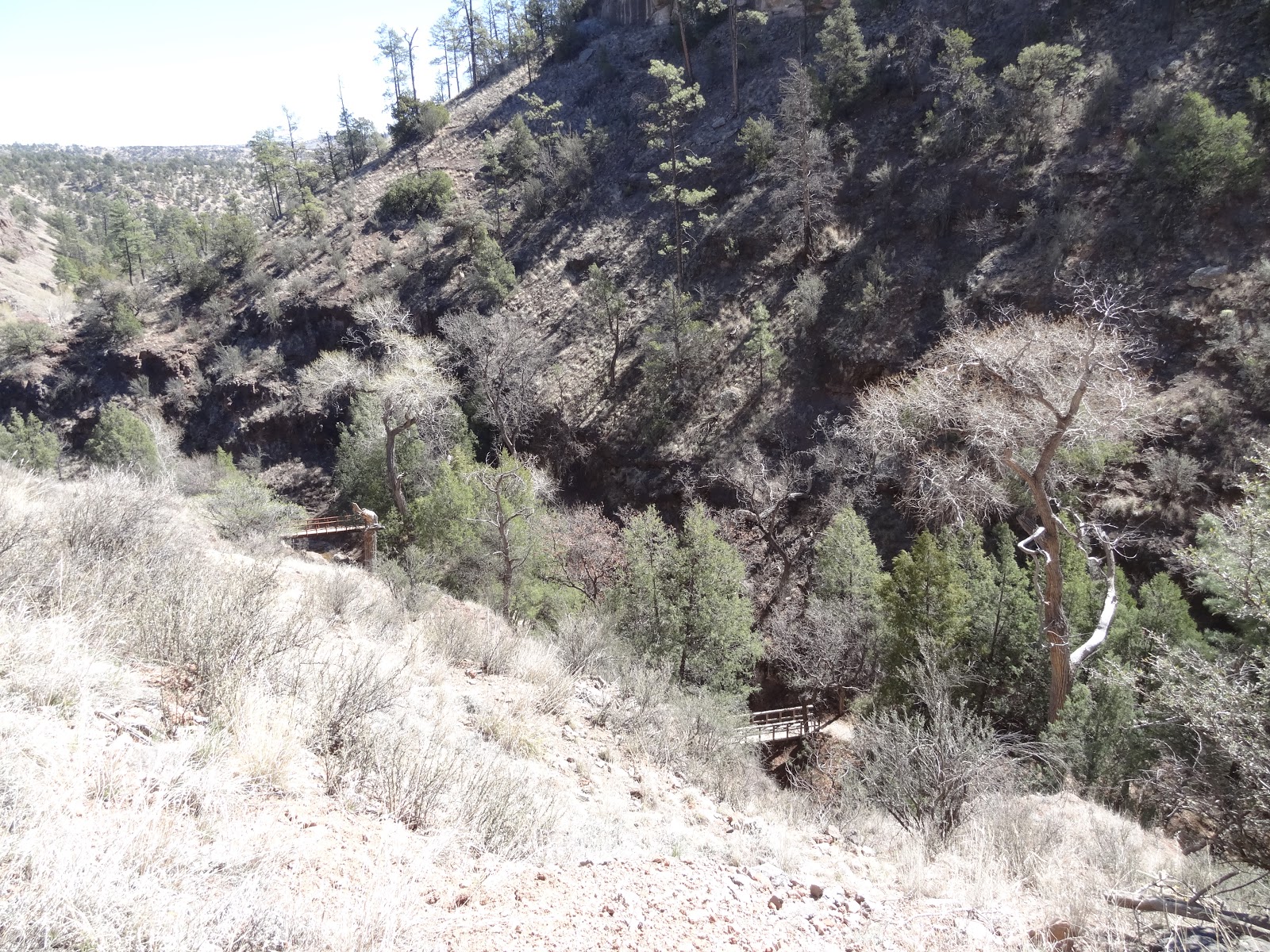
The park lies about an hour and half drive north of the nearest city to the monument, Silver City. It's a very windy, mountainous road. On our way there, we picked up some hitchhikers. A nice, older couple that had gotten a little lost and strayed from the Continental Divide Trail. Their "trail nicknames" were "Flat-lander" and "Chips"...😊

Additionally, the road dead-ends at the Monument, so the only way back is the way you came. Therefore, you really have to dedicate some time to get out there, this is not a quick roadside stop.

The reward is worth it, the Gila Cliff Dwellings are some excellent ruins. Certainly not as impressive as the dwellings at Mesa Verde, but still very neat.

The dwellings were once the home of the Mimbres Culture, a branch of the Mogollon Peoples. The Mogollon Culture was prevalent in the area of present-day New Mexico, Arizona, and the Mexican states of Sonora and Chihuahua.

These cliff dwellings were built in the latter half of the 13th century (around 1275 AD) and were inhabited until sometime in the 14th century. It is not known exactly why the Mimbres left the area, but it was likely due to a sustained period of drought. 

The first Americans of European descent to discover the cliff dwellings were the party of Henry B. Ailman, a miner from Silver City. Funny story, Ailman and his friends had been summoned to jury duty in the summer of 1878. Not wishing to participate, they headed out on an indefinite prospecting trip and stumbled across the site. The ruins gained the attention of a number of archaeologists, historians, and tourists, and in 1907, Theodore Roosevelt designated the area as a National Monument under the Antiquities Act.

Your first stop should be the Visitor Center, which has a good museum with lots of exhibits and artifacts from the Mogollon Peoples and the Apache. Then get back in your car and drive to the Cliff Dwellings trail head. This is a pleasant, mile-loop that takes you along the Gila River and then up to the cliff dwellings themselves. This is a self-guided tour, but during the summer months you can catch a ranger-led guided tour.

The trail starts by crossing the Gila River. This is near the location of the headwaters of the Gila River. The Gila River eventually meets up with the Colorado River in the town I grew up in: Yuma, Arizona. In Yuma, the Gila River is almost always dry (I might have seen water in it once, during a flash flood), so it was cool to see this river flowing.

The trail goes along the river for a little bit, and then it's a small climb up to the dwellings. This is really your only chance to see the dwellings from afar, so stop for some pics.


Archaeologists have identified 46 rooms among these dwellings, and predict they were occupied by about 10 to 15 families. Enjoy your time as you scramble around these dwellings and soak in the views. There is one ladder, but it's not too crazy.


I'm so glad we got to spend some time in Silver City, NM. It was a nice little bonus to end our trip on. It's a cool old mining town, filled with history and unique architecture. It's also a college town (home to Western New Mexico University), so it's got a little bit of a night life. Tara and I liked this town a lot.


this canal used to be the main street. But when it flooded in the early 1900s it was abandoned and is now a nice city park

liked this old theater sign

Grant County Museum


Tara loved this old house

Grant County Courthouse


colorful streets


Silver City and Gila Cliff Dwellings is a great place to visit.