Saturday, April 13, 2019

Golden Spike National Historic Site

Visited: Dec 2015
Nearby city: Brigham City, UT

By the mid-19th century, railroads had fundamentally changed everything about American life. Transport of people and goods that had taken weeks to a month could now be done in a couple of days. The location of a railroad could single-handedly make or break a town. It brought fortunes for many. By the end of the Civil War, transportation by rail really skyrocketed, and Congress began to intensely focus on completing a grand transcontinental railroad that would connect the entire country, from the East Coast to the West Coast.

For most of the 1800s, your options for travel to the West Coast to the golden hills of California were (1) an incredibly arduous overland trail by wagon across the plains, deserts, and mountains or (2) the long and expensive trek by sea all the way around South America's Cape Horn. Either way, it was a dangerous journey that would take months. Rail could make the journey much more feasible, but the task of completing that rail was a monumental effort.

A transcontinental railroad had been a dream as early as the 1830s. In the 1850s, the U.S. government started to get on board with taking on this gigantic task and started to do surveys and looked into possible locations. Eventually it was decided that the route would roughly trace the paths of the most commonly traveled trails west: Mormon, Oregon, and California Trails. The outbreak of the Civil War also necessitated a more northerly route.

Construction started in 1863, the line was built by two private companies over public lands provided by extensive US land grants. The Central Pacific Railroad Company of California started at Sacramento and headed east, while the Union Pacific Railroad started in Omaha and headed west.

Eventually the two rail lines met in the high desert of Promontory Summit, Utah; about 66 miles northwest of Salt Lake City. The mad rush to get to the meeting place was incredible. On April 28th 1869, over 10 miles of track was laid in a single day. Workers (most of the workers on the Central Pacific were Chinese immigrants, while most of the Union Pacific were Irish immigrants) labored long and hard hours for extremely low wages.

The transcontinental railroad officially completed on May 10, 1869. The ceremony included the driving of the final spike "the golden spike" by Leland Stanford, governor of California and President of Central Pacific Railroad. The transcontinental railroad immediately ushered the U.S. into the Industrial Age. A journey that once took nearly 6 months now took only a week, and was obviously much cheaper to travel across the country.

Golden Spike National Historic Site preserves the exact spot where this important historical event occurred. They have a great museum at the site.


a replica of the golden spike, the real one is enshrined at Stanford University


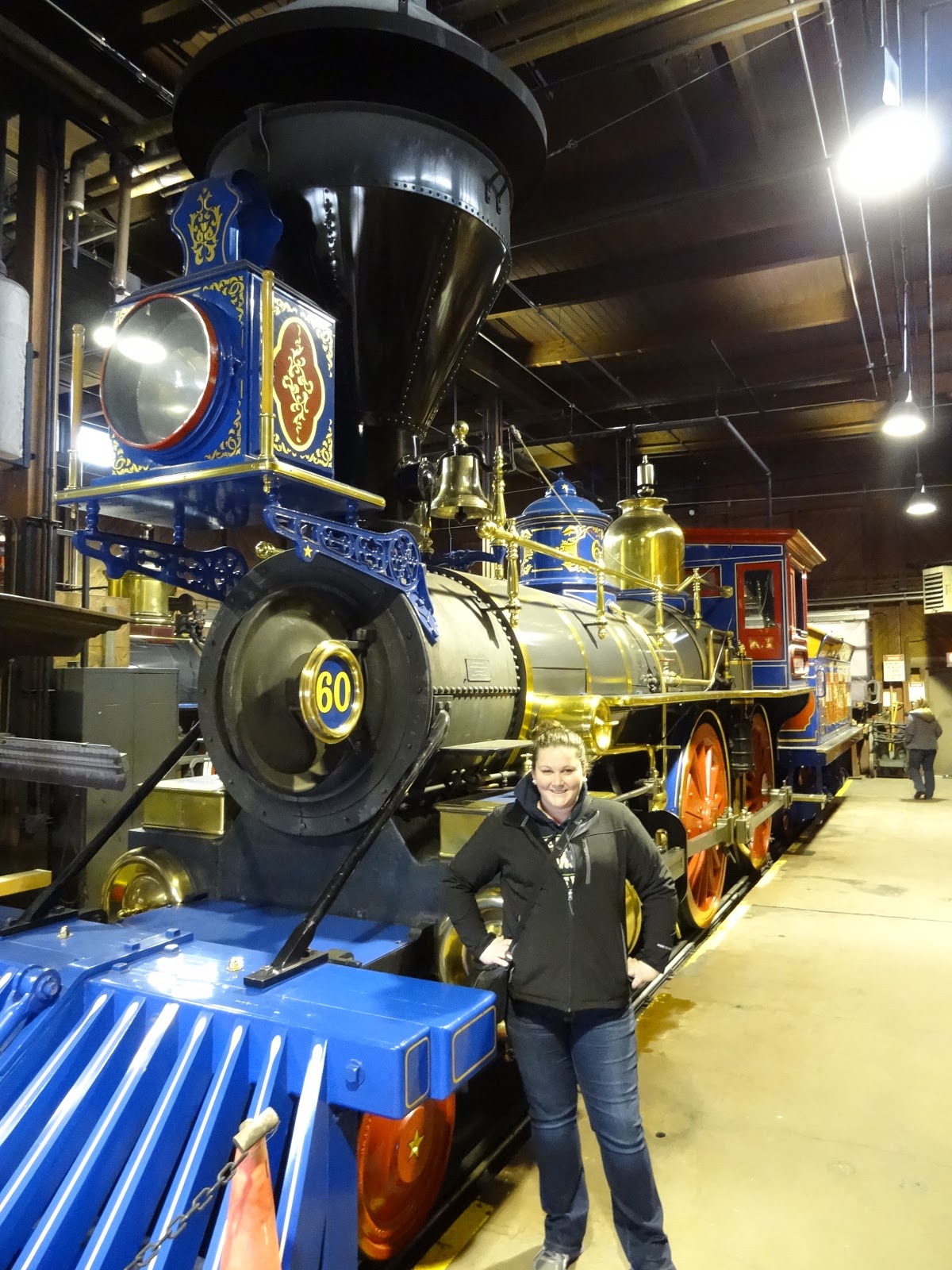
    During the summer, the site holds a re-enactment of the May 1869 celebration. As a fourth grader, Tara went to the site on a field trip and participated in the re-enactment. She played the part of the choir director that sang patriotic songs. Since we visited at wintertime, the trains were in for maintenance. Our tour guide let us go to the garage to check out the locomotives. These locomotives are very intricate replicas and very cool.


 This was a cool site and is well worth a quick stop. For more info: https://www.nps.gov/gosp/index.htm

Saturday, March 23, 2019

Top 10 Guided Tours

Our National Parks offer a number of guided tours, hikes, programs and activities for the whole family to enjoy. I've put together a list of the Top Ten guided tours that Tara and I have done in the National Parks. As I was compiling the list, I realized that we haven't done too much of these. Nevertheless, here are the Top 10:

10. Kettle Falls Tour - Voyageurs National Park
Cruise comfortably along Lake Kabetogama to the historic hotel at Kettle Falls Dam in this beautiful park in northern Minnesota. The cruise was very nice and not a big crowd (only about 20 people can fit on the boat), therefore reservations are a must. We saw some bald eagles and other birds and the ranger on board provided lots of interesting stories about the history of the park. Once you get to the Kettle Falls area, you have about 2 hours to explore the dam, the historic hotel (which you can still reserve a room for the night if you wish, it is the only lodging in the park and his only accessible by water), and grab a bite to eat (lunch not included with tour price).

9. Buckstaff Bathhouse - Hot Springs National Park

Maybe this is cheating, I don't know if this counts as a guided tour, but it is definitely a pampered tour. 😁 Step back in time and go through the traditional bath experience that was all the rage in the 20s and 30s. If you wish, you can do it au naturel (or in a swimsuit if you're not comfortable with that). You'll have you're own bath where you can soak for about 10 minutes in nice hot water, an attendant will scrub you down, then you take a sitz bath, vapor closet, and a needle shower. It's definitely a unique experience.

8. Domes and Dripstones Tour - Mammoth Cave National Park

The Domes & Dripstones is the great tour for families at Mammoth Cave. It's not too long and is a good showcase of both distinct sections of the cave (the dry part and the formations of Frozen Niagara). The tour starts with a huge descent down a number of stairs way to the bottom of the cave (make sure to use the railings), you hear lots of stories about the history of the cave and then it concludes with the spectacular Frozen Niagara.

7. Cranberry Islands Tour - Acadia National Park


Acadia offers some of the greatest views in the country, and the Cranberry Islands Tour is a great way to observe the rocky coastline of Mount Desert Island from the crystal blue waters of Frenchman Bay. We saw some seals, birds, and the spectacular "cottages" of the wealthy elite dotted along the shore. You have a short 40 minute stay on Cranberry Island and the tiny village of Islesford. It's pretty short, but it's enough time to see the small museum and the historic church. A very pleasant and beautiful tour.

6. Cliff Palace Tour - Mesa Verde National Park


The tour of the largest cliff dwelling in North America is impressive and awe-inspiring.

5. King's Palace Tour - Carlsbad Caverns National Park


This section of Carlsbad Cavern is only available to visit on a guided tour. This tour was very cool. Carlsbad Cavern is a simply amazing cave that left Tara and I breathless. Our tour guide was very entertaining and well-informed and she gave us the experience of total blackout for about a minute (which is always incredibly frightening) and then lit a candle to experience the cave in a whole new light, no pun intended.

4. North Canoe Program - Voyageurs National Park


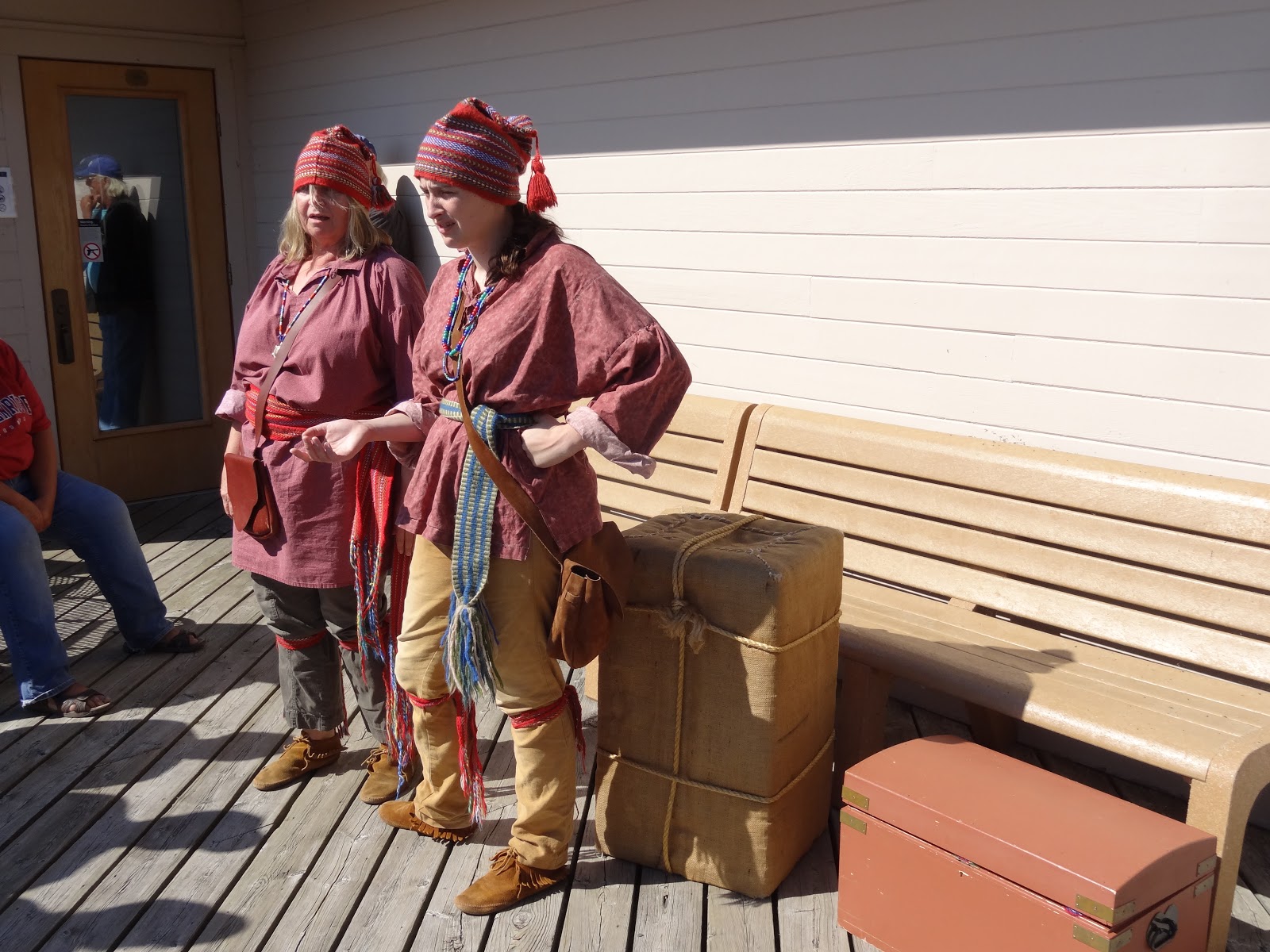
This is a very fun tour where you learn about the history of the Voyaguers (French trappers) and then board a model of a 26-foot north canoe and paddle out on Lake Kabetogama. The best part is that your tour guides are dressed in traditional Voyageur garb and stay in character the whole time. It's lots of fun and entertaining.

3. Yankee Freedom III Ferry - Dry Tortugas National Park


One of the few ways to visit this National Park is to board the ferry: Yankee Freedom III in Key West (it operates almost every day of the year) and head out to the Dry Tortugas. It's an all-inclusive trip and they take care of everything for you. You might want to take some Dramamine for those high seas (but if you forgot to pack any they have some on the boat you can purchase). They provide breakfast, lunch, guided tour of Fort Jefferson, and snorkel gear. The staff are super friendly and helpful and will make your stay at Dry Tortugas unforgettable.

2. Shark Valley Tram Tour - Everglades National Park


Tara and I loved this tour of the Everglades. Not only is the natural scenery amazing, the wildlife you will see along this tour is spectacular. There were lots of birdwatchers on our tour, so they were going crazy due to all the exotic birds we saw. And of course, lots of lots of alligators. I thought we would be lucky and see one or two, we saw DOZENS. The tour guide was right, by the end of the tour the novelty of seeing an alligator will wear off. 😃 Also, our tour guide was amazing for this tour. Very entertaining and informative.

1. Balcony House - Mesa Verde National Park


Gear up for this adventurous tour at Mesa Verde National Park (known as the "Indiana Jones" tour). This exquisite cliff dwelling is a bit of a task to get to. First up is the climb on a 32-ft ladder, then the tour of the historic dwelling (once again, our tour guide was fantastic) and then squeeze through 12 foot, 18 inch wide tunnel and up a narrow pathway back to the top of the plateau. This was an exciting and thrilling tour.

Saturday, March 16, 2019

Lava Beds National Monument

Visited: Sept 2014
Nearby city: Tulelake, CA

This area of northeastern California is home to the basaltic lava fields from the eruptions of Medicine Lake Volcano, whose last major eruption was back in 1000 AD. This monument is similar to Craters of the Moon in Idaho, here you will find over 700 caves and lava formations such as lava tubes, fumaroles, cinder cones, spatter cones, and volcanic fields. 

We basically did a drive through of this Park. It was a very short stay. Our first stop was Petroglyph Point. We made a big mistake and thought the petroglyps were on top of the hill.  So we hiked up to the top of the hill (it took about half hour or so)...oops, the petroglyps aren't on top of the hill, they're on the bottom along the cliff face. 
good view from the top...but no petroglyphs

the petroglyphs were at the bottom of this cliff

here they are … not that impressive 😃

So, the hike wore us out a little bit and wasted our time. Therefore, we didn't do much here but drive through. This area has an interesting history, it was the site of the Modoc War of 1872-1873. When members of the Modoc Tribe refused to leave their lands in California and move to Klamath Reservation in southern Oregon, hostilities broke out between Modoc and white settlers. A group of about 150 Modoc, led by Kintpuash (known as "Captain Jack"), hid out in these lava fields and resisted the US Army. The hostilities led to the death of General Edward Canby, the only US general to be killed during the Indian Wars. There is a cross in the monument that marks the spot where he died.
   
Again, we we're short on time, so we only stopped at one of the lava tube caves, Skull Cave.

If you're going to hike through the caves you'll need to bring your own light source. There's a lot more to explore here...but we just didn't have enough time. If we do go back though, we'll make sure to skip the petroglyphs. 😁 More info here: https://www.nps.gov/labe/index.htm