Tuesday, August 13, 2019

Voyageurs National Park

Visited: Aug 2018
Nearby town: International Falls, MN

"I could carry, paddle, walk, and sing with any man I ever saw. I have been twenty-four years a canoe man, and forty-one years in service; no portage was ever too long for me, fifty songs could I sing. I have saved the lives of ten voyageurs, have had twelve wives and six running dogs. I spent all my money in pleasure. Were I young again, I would spend my life the same way over. There is no life so happy as a voyageur's life!"
-an anonymous retired voyageur, quoted in the book "Lake Superior" by James H. Baker, Secretary of State of Minnesota 1860-1862

In the far reaches of Minnesota, along the border with Canada, Voyageurs National Park protects the pristine wilderness of the Kabetogama Peninsula and its surrounding lakes; Rainy Lake, Kabetogama Lake, and Namakan Lake. 

From the 1680s all the way to about the 1870s or so, this area was a prime hub of the fur trade industry. Voyageurs (French for "travelers") were French Canadians - mostly from the Montreal area - who would be hired by wealthy merchants to travel by large canoes up the St. Lawrence River all the way to the western edge of Lake Superior. There, at Grand Portage, they would take smaller canoes and venture into the wilderness to trap and trade with Native Americans for pelts and fur of a variety of animals: marten, otter, lynx, mink, and especially beaver. They would then transport the furs all the way back to Montreal for export across the ocean to Europe. They would repeat this process throughout the year until the wintry weather made the journey impossible. As hats made from beaver fur became incredibly popular in the cities on the East Coast and Europe, the business exploded and at its height in the 1810s, there were over 3,000 voyageurs.

The voyageurs were highly valued employees of the prominent fur companies; including the Hudson's Bay Company, the North West Company, and the American Fur Company. Voyageurs would arise daily at around 2 in the morning and begin the long day of paddling. Voyageurs were expected to work 14 hours a day and paddle at a rate of 55 strokes per minute. They would take a short break once an hour to smoke pipe. Distance was measured in "pipes" (distance traversed between breaks). Obviously there was little time to hunt for food, so a voyageurs diet mainly consisted of what they could store in the canoe: packaged meals such as salt pork, rubaboo (a stew made from dried peas or beans), sea biscuits and pemmican (dried meat pounded into small pieces mixed with fat). 

When it came time to carry the canoes and cargo over land (what is known as "portaging"), voyageurs were expected to carry two bales of fur, each weighing 90 lbs. for a total of 180 lbs. Some carried more, to reduce the amount of trips back and forth to portage all the cargo. There is a report of a freed slave that became a voyageur named La Bonga, who was 6 ft 5 in. tall and once carried 7 bales (630 lbs.) for a distance of one-half mile.

This was dangerous work; many voyageurs never learned to swim and drowning was common, as was broken limbs, compressed spines and hernias (due to all the heavy lifting).

Music was an everyday part of life for the voyageurs. The men would sing as they paddled, to help pass the time and improve and boost morale. Furthermore, the rhythm of the songs helped synchronize their paddling. Some of the most popular songs were "Alouette" and "A la claire fontaine." Canadian school children to this day learn voyageurs songs as a part of studying French Canadian culture. The exploits and adventures of the voyageurs are legendary and a large part of Canadian social culture and history. Much like the fabled pioneers in US history.

If there is one thing to do at Voyageurs National Park, I would recommend participating in a North Canoe program. The rangers (in traditional Voyageur garb) will teach you all about their history and then take a group out onto the lake in a replica canoe. The rangers stay in character the whole time, and you'll sing songs, and all that stuff. It's very fun and enjoyable. It's free, but you do need to sign up for it, so call ahead and reserve a spot. It's available at either the Rainy Lake Visitor Center or the Lake Kabetogama Visitor Center. We did ours at Lake Kabetogama.


Lake Kabetogama


The Voyageurs


There are three visitor centers in the park (from east to west): (1) Ash River (2) Lake Kabetogama (think of the Roman "toga" when you pronounce it: Caw-be-toe-gama) and (3) Rainy Lake. These visitors centers lie on the outskirts of the park. Most of the park lies on the Kabetogama peninsula (which can only be accessed by boat) and 40% of the park is water. You can't really explore the park in your car, so to truly experience the park you need to get out on the lakes and rivers with your own boating equipment, or rent some, or go on guided tours.

In the Ash River section of the park, take the Blind Ash Bay Trail for outstanding views of Lake Kabetogama.


Make sure to stop at the Ash River Visitor Center for scenic views and a great picnic stop. The narrows here connect Lake Kabetogama with Namakan Lake.


We also stopped at the Rainy Lake Visitor Center to soak in the views.


saw some turtles on a log basking in the sun
There are a number of guided tours by boat that are available either from Rainy Lake Visitor Center or Lake Kabetogama Visitor Center. We took the Kettle Falls tour from the Lake Kabetogama (you can also do a tour of Kettle Falls from Rainy Lake Visitor Center as well).

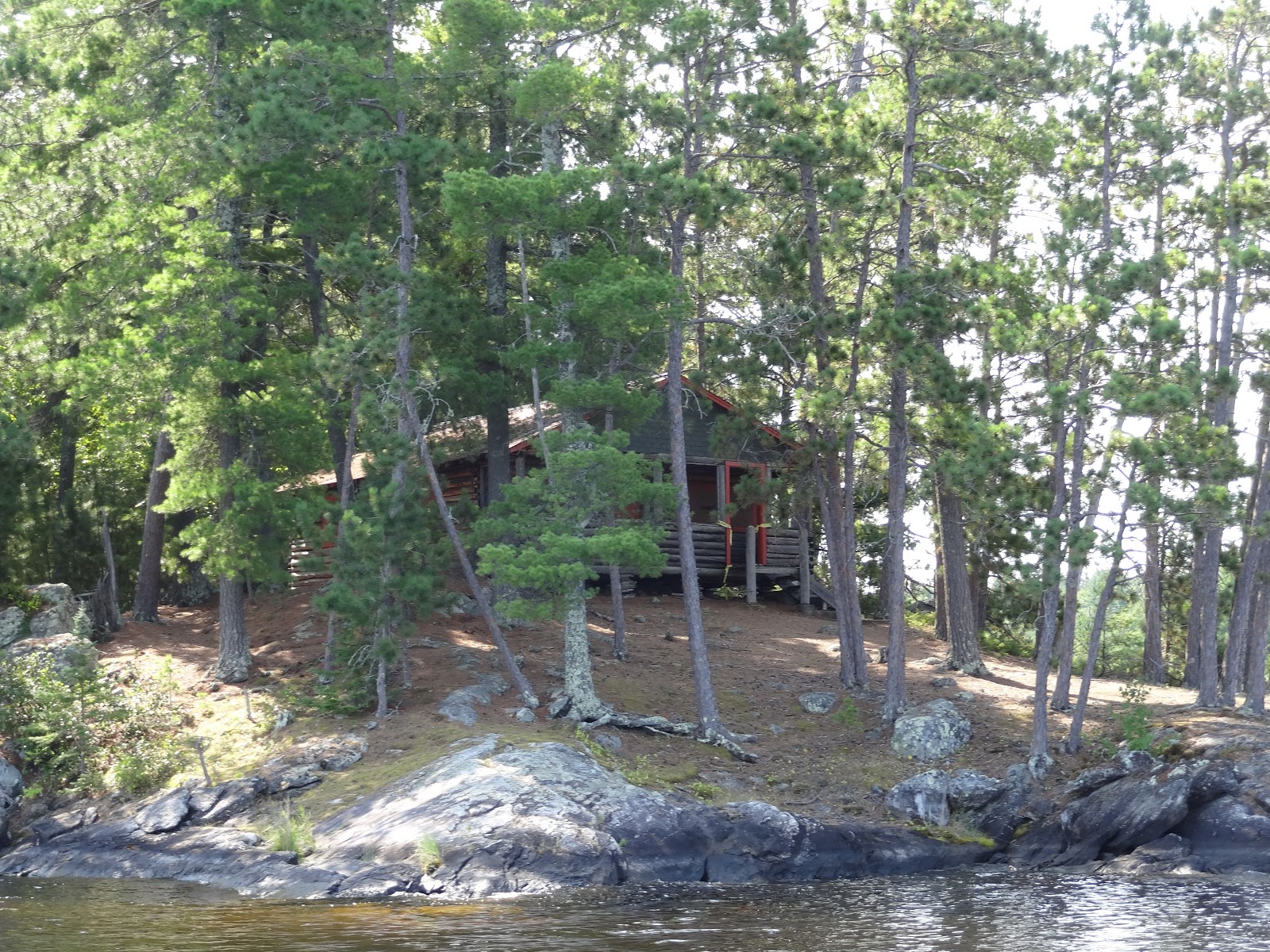
Kettle Falls is an area of rapids located in the waterway connecting Lake Kabetogama with Rainy Lake. The falls required voyageurs to portage at this spot. In 1910 a dam was built here. And in 1913, the Kettle Falls Hotel was built here, right on the edge of the Kabetogama Peninsula. This historic hotel still operates today. It is the only lodging inside park boundaries, and is only accessible by boat. The boat from the visitor center is a small pontoon boat (I understand the boat from Rainy Lake is much bigger). Reserve ahead of time to make sure you get a spot on the boat. The small group made for an excellent guided tour and lots of opportunity to view wildlife. The boat ride takes a couple of hours but the rangers make it interesting. Don't worry about motion sickness, these are calm waters. Once you get to Kettle Falls you'll have an hour or so to explore on your own, eat at the hotel's restaurant, see the dam, etc.


bald eagle


Kettle Falls Hotel

hotel patio


the floor of the billiard room was very warped


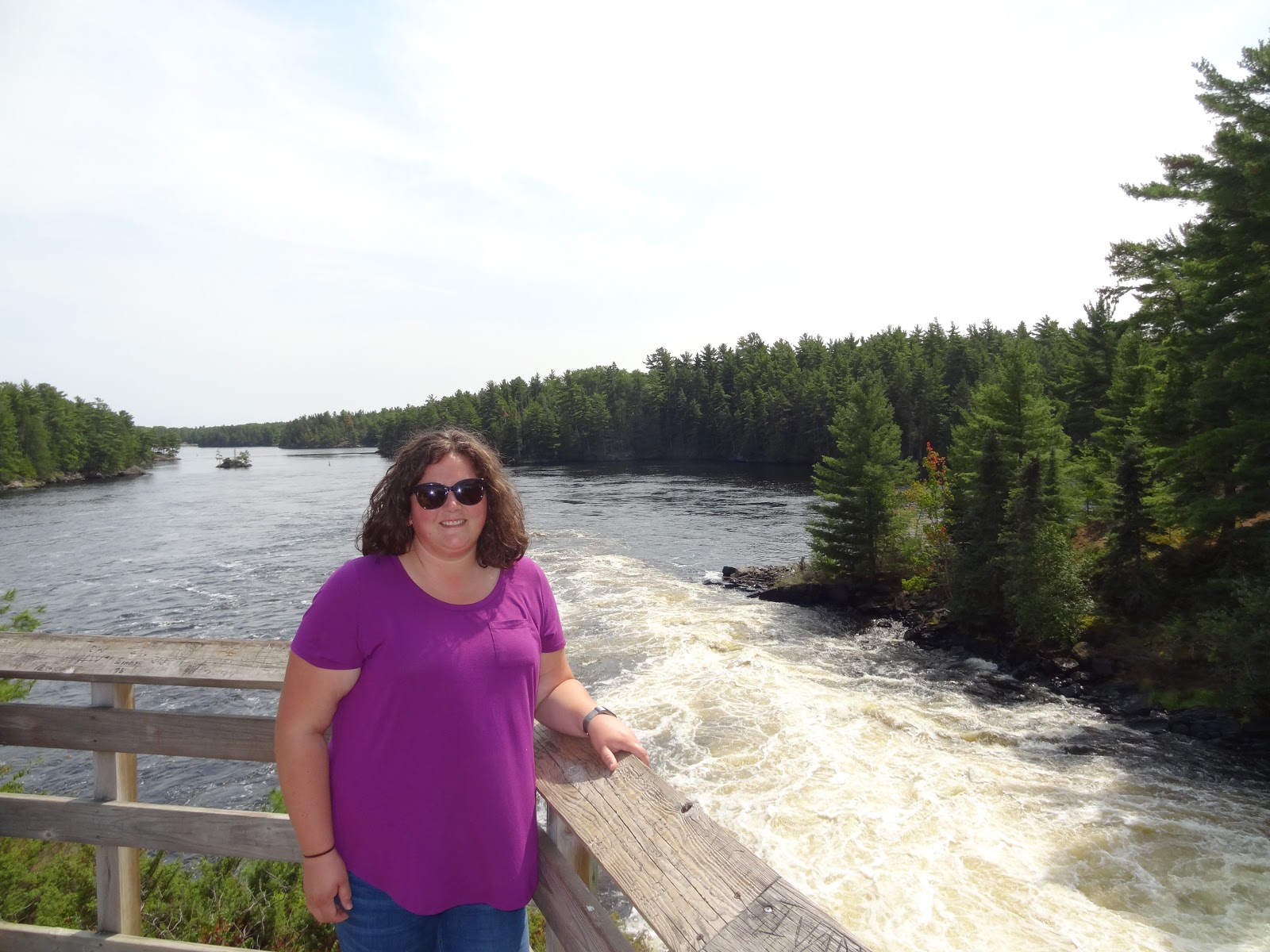
the rapids of Kettle Falls


We loved our visit to Voyageurs National Park. If you find yourself in Minnesota, head north to experience this natural wonder and learn of its unique history. If you visit, make sure to take a guided tour or bring a boat so you can experience this part from the water as intended. More info here: https://www.nps.gov/voya/index.htm

Wednesday, July 31, 2019

Grant-Kohrs Ranch National Historic Site

Visited: May 2016
Nearby town: Deer Lodge, MT


This working ranch in western Montana is one of the best preserved ranch homes and estates from the late 19th century. Just outside the small town of Deer Lodge, the Grant-Kohrs Ranch serves as a great roadside attraction to spend an hour or two and tour the ranch. Best of all, the tour is free.

The surrounding countryside of the ranch, like most views in the Treasure State of Montana, is a spectacular vista.


The ranch started in 1859 by Johnny Francis Grant, and he built his home there in 1862. Grant founded the town of Cottonwood (later to become Deer Lodge). Grant had grown up in Quebec and came to the American West in the 1840s to venture in the fur trade. However, the trade was quickly dying out at that time and Grant switched to the cattle business. As more settlers moved to the area, Grant quickly became outnumbered because he only spoke French (being from Quebec) and all the new settlers spoke English. Grant moved back to Canada and sold the ranch to Conrad Kohrs in 1866.

Conrad Kohrs had moved to the west during the California Gold Rush period and made his fortune not by striking it rich, but by selling beef to the hungry miners. His cattle empire eventually grew to over 50,000 head of cattle and grazing pasture of 10 million acres. He became known as the undisputed "Cattle King of Montana."  

After purchasing the Grant ranch, Kohrs expanded the home and the operations of the ranch. Kohrs modernized the methods of ranching: by fencing his rangeland, raising and storing fodder, and buying purebred breeding stock to produce high-quality beef. When the devastating and severe winter of 1886-1887 hit, and temperatures hovered at 30-40 degrees below zero for months and months, Kohrs' modern methods helped him weather the storm. Indeed, ranchers that had been using open range for their herds lost upwards of 90% of their cattle to brutal cold and lack of feed. With many ranchers going bankrupt, Kohrs managed to stay in business. Kohrs also dabbled in politics, serving as county commissioner, in the Territorial Assembly, and as a member of the Montana State Constitutional Convention.

Kohrs passed away at his ranch home in 1920, at the age of 84. The family maintained possession of the ranch, until his grandson sold the property to the National Park Service in 1972. The NPS runs the site as a living history ranch, and strives to keep all operations as close to the late 19th-century as possible, such as using draft horse teams to hay the land, and blacksmiths to make horseshoes, etc.

Once you arrive at the Visitor's Center, get your free ticket for a guided tour of the home. A guided tour is the only way to go inside the home. Tours are available throughout the day, but they are first come, first served...so arrive early.

Unfortunately, there are no pictures allowed inside the home. The home is beautifully preserved and full of heirlooms and priceless antiques belonging to the cattle baron's family.
front of the home, originally built in 1862


Kohrs expanded the home by adding this portion in the back.


Tara loved the back porch


After the guided tour, you can walk around the other ranch buildings on your own. Check out the website to see if any ranger programs are going on: they have wagon tours, blacksmith demonstrations, test out your roping skills, etc. The thing that interested me the most was the display of all types of vehicles and wagons used at the ranch. It's quite the collection.


blacksmith
If you are in the Deer Lodge area (about halfway between Butte and Missoula), the Grant-Kohrs Ranch is a great place for a quick stop to learn about ranch life in the American West during the 19th century. For more info: https://www.nps.gov/grko/index.htm

Thursday, July 25, 2019

Nicodemus National Historic Site

Visited: March 2016
Nearby town: Hill City, KS

"I am anxious to reach your state ... because of the sacredness of her soil washed by the blood of humanitarians for the cause of freedom."
-from an 1879 letter of S.L. Johnson, an African-American from Louisiana
 to the Governor of Kansas, John St. John

As the era of Reconstruction came to an end, many African-Americans in the South looked to other places in the country to experience freedom and economic prosperity. These recently freed slaves still endured great hardship and inequality, and began to move elsewhere. Many went to the big urban centers of the north, but a number of them looked west.

These Black Pioneers were enticed by tales of a fertile wilderness and the opportunity to own land through the homestead process in the frontier of Kansas. To many African-Americans, Kansas was known for the Underground Railroad and the abolitionist John Brown. Kansas seemed like a promised land. More than a dozen African-American settlements popped up in the wild reaches of western Kansas. Most of these towns quickly folded, the last remaining village is Nicodemus, now preserved as Nicodemus National Historic Site.

The town was named for a legendary slave from the story "Wake, Nicodemus" (1864), who passed away and was buried in a hollow tree and asked to be awakened on the Day of Jubilee. Nicodemus was founded in 1877 by Reverend W.H. Smith, a black minister, and W.R. Hill, a white land developer from Indiana. By the mid-1880s Nicodemus boasted two newspapers, three general stores, three churches, hotels, an ice cream parlor, bank, and a livery stable. At its peak, more than 700 people lived in the town.

Unfortunately, the "promised land" was not quite as promising as once thought. Harsh winters and lack of vegetation made farming difficult. Racism reared its ugly head, and many white Kansans were afraid that the area would be "overrun" by African-Americans. The Governor of Kansas and other political leaders cut back on efforts to attract recently freed slaves and actually discouraged settlement.

But the nail in the coffin for Nicodemus was the failure to bring the railroad through town. After several attempts to lobby the Union Pacific Railroad to build a line through Nicodemus failed, the railroad opted to go through the town of Bogue, further to the south. Many moved either to Bogue or back to the forested hills of Kentucky and Tennessee. The population began to dwindle. Many more moved out during the Great Depression and Dust Bowl of the 1930s. By 1950, only 16 people lived in Nicodemus. The Post Office closed in 1953. Although Nicodemus had basically become a "ghost town" it was the only African-American Reconstruction settlement at the time that still had buildings standing. So, in 1976, the community was designated as a National Historic Landmark, and became a unit of the National Park Service in 1996.

Although the town is essentially abandoned, there are still some descendants of the original settlers living in the surrounding area. Perhaps Nicodemus's most famous resident is Veryl Switzer. Switzer was an All-American football player for Kansas State 1951-1953, he then played for the Green Bay Packers for a couple seasons before joining the United States Air Force. Switzer, now 86 years old, is enshrined in the Kansas Sports Hall of Fame.

The Nicodemus Historic Site preserves five original buildings from the town's heyday: (1) the Town Hall; (2) African Methodist Episcopal Church; (3) First Baptist Church; (4) St. Francis Hotel; and (5) Nicodemus School District #1 Schoolhouse.

Apart from the Town Hall (which serves as the Visitor Center), the buildings are in desperate need of repair and the inside of the buildings are not open to the public. The Visitor Center has sporadic hours, but on the last weekend of July, Emancipation Day is celebrated and descendants of the original settlers from all over the country come to Nicodemus for food, music, and a parade.
the Town Hall
If no one is available at the Visitor Center, there are pamphlets and printed guides available for a walking tour of the settlement. This is an interesting history that makes for a unique road trip stop.
St. Francis Hotel

Baptist Church


Nicodemus schoolhouse


A.M.E. (African Methodist Episcopal) Church

work being done to restore the interior of the A.M.E. church


This is an interesting and unique history that is worth a quick stop. For more info: https://www.nps.gov/nico/index.htm