Visited: May 2018
Nearby town: Salinas, CA
Hidden away in a rather remote area of central California is one of the state's lesser known gems, Pinnacles National Park. This relatively small park is one of our newest ones, created in 2013 (however, it had been a national monument since 1908).
The park's towering and somewhat eerie pinnacles, crags, and spires were created by plate tectonics, earthquakes, and volcanic activity. The park is relatively compact, but bear in mind there is no through road in the park boundaries that connects the East and West Entrances (you'll have to take about an hour and a half loop either from the north or south to hit both entrances). Because of that you may want to spend at least two days in the park, one for the west entrance and one for the east entrance.
We started our journey at the East Entrance of the Park, and did the incredible Bear Gulch/High Peaks/Condor Gulch loop trail. This combination was a great hike, pretty long (about 6.7 miles), but well worth it. And it showcases pretty much all there is to see here. If you don't have enough time you can shorten it by just doing the Bear Gulch section, or just the High Peaks section, etc.
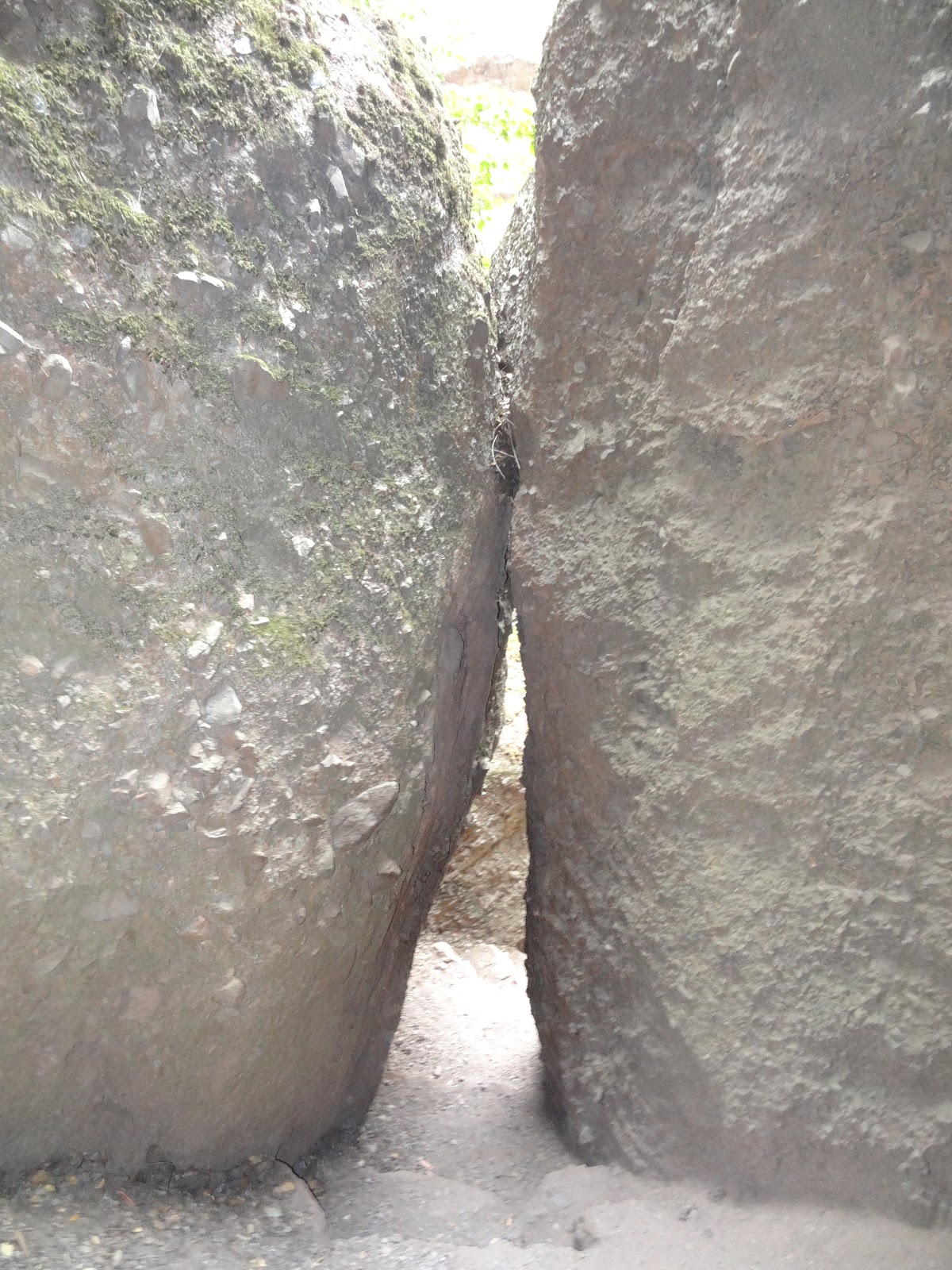
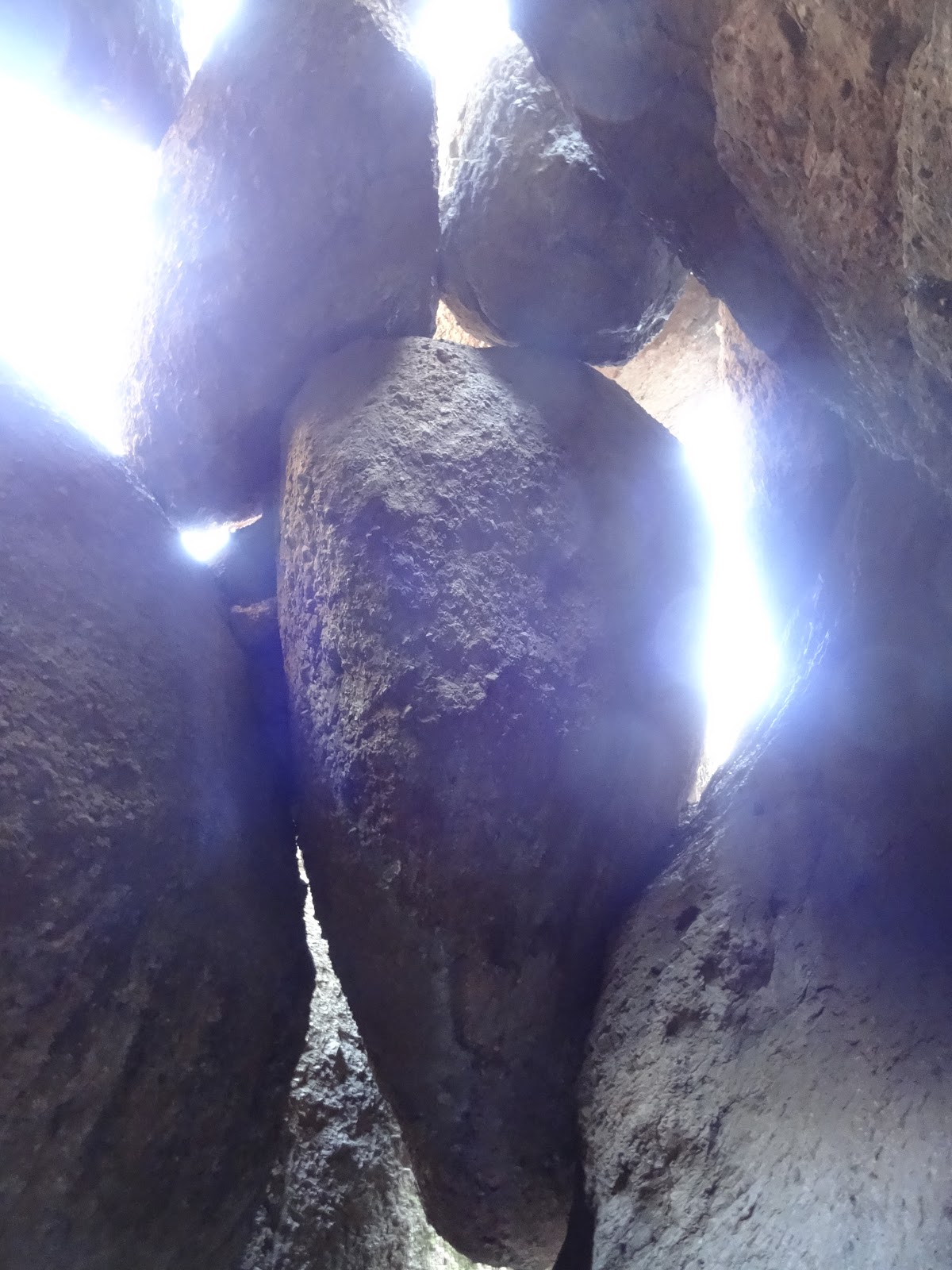
The trail first heads to the Bear Gulch reservoir. This hike is very cool because you go through a cave. It's a talus cave, which means it is formed by openings in large boulders piled up on mountain slopes. Therefore, it is not entirely enclosed, but it would be a good idea to have a flashlight for the particularly dark sections.
 |
| a rather tight squeeze |
Going through the talus cave was very enjoyable. As you can probably tell, Pinnacles is an outstanding destination for rock climbers. We did see a number of climbers throughout the park. Eventually, you emerge from the talus cave and get to the Bear Gulch reservoir.
At this point, the trail heads up to the top of the craggy peaks, this is the High Peaks section.
Just a heads up as you go along the High Peaks portion. Once you get to the top of the mountain, there are some narrow ledges and steps along the trail. There are railings to help you along. It's a little intense, but not too crazy.
As you go along the High Peaks section, look toward the skies for condors. You'll also see lots of turkey vultures. Here's how to spot the difference, the bottom of the wings of a turkey vulture are brown. The bottom of California Condor wings have a white patch along the top part of the wings, like this:
Along the trail, we were treated to a rare surprise. We saw a juvenile condor and two adult condors right along the trail. We we're right next to them! It was awesome.
Condors have been a huge success story in the park. In 1987, these large rather majestic birds actually went extinct in the wild, and only 27 individuals in captivity. They have since been re-introduced in northern Arizona and central California, including the park boundaries. Pinnacles National Park now manages 86 wild condors within the boundaries (notice the numbered tag on the adult condors). As of 2017, there are now 463 condors living either in the wild or in captivity. Seeing these condors in the wild up close and personal was a highlight of our visit.
The next day we headed to the West Entrance and did the Balconies Loop Hike. This hike was good (although not as cool as the High Peaks loop), and the cave section is a little more difficult than the Bear Gulch cave, some scrambling and bouldering required. Nothing too intense.
Although Pinnacles is not as well-known as other California national parks (such as Yosemite, Sequoia, Death Valley, etc.), it is well worth a visit. Pinnacles exceeded our expectations big time. For more info:
https://www.nps.gov/pinn/index.htm