Saturday, April 17, 2021

Apostle Islands National Lakeshore


Visited: Aug 2018
Nearby town: Bayfield, WI

The beautiful Apostle Islands are located in Lake Superior, just off Wisconsin's northern coast. There are 21 islands, the largest of which is Madeline Island. Madeline is the only island with commercial development and private ownership of land. The other 20 islands are protected by the National Park Service as Apostle Islands National Lakeshore, established in 1970.

We stayed on the Wisconsin mainland in the town of Bayfield. This is where you can take a ferry to Madeline Island (in the winter the lake freezes over and you can take the "ice road" to the island). Bayfield is also the spot to embark on guided tours of the Apostle Islands. Apostle Island Cruises is the NPS-authorized concessioner and it offers a variety of cruises and/or kayaking to explore the islands. We stayed in Old Rittenhouse Inn in Bayfield, a cozy and picturesque bed & breakfast.

We took the Morning Grand Tour through the Apostle Island Cruises, it was a great trip. This 1/2 day tour cruises along almost all the islands (including Devils Island), and provides great scenery. It does not dock at any of the islands. We got great views of the town as we left the port at Bayfield.


You'll pass by Basswood, Hermit, and Oak Islands. Enjoy the scenery.


Glaciers used to cover this area during the Last Ice Age. As the glaciers melted, the waves of the newly-formed Lake Superior caused the erosion you see on the red sandstone of these islands. The earliest known inhabitants of the islands were the Anishinaabe peoples in around 950 AD. French fur explorers, led by Etienne Brule, first spotted these islands around 1630. Jesuit priests later named the island group after the Twelve Apostles (because it was made primarily up of 12 larger islands).


The highlight of the tour is Devils Island. The boat slowly goes around the whole island. There is a lighthouse, and the craggy coastline is full of sea caves (you can take a specific tour that explores some of these caves by kayak) and incredible natural arches. It reminded me of Arches National Park...if it got flooded. 😀 It was very unique and memorable.


For more info, here is link to NPS site: https://www.nps.gov/apis/index.htm

BONUS: head over to nearby Duluth and explore the spectacular North Shore of Lake Superior along the Minnesota coastline. We stopped at Split Rock Lighthouse, Gooseberry Falls, and the Palisades cliffs. 


the large foghorn at Split Rock Lighthouse


incredible scenery of Split Rock Lighthouse


the tannin of Gooseberry Falls gives the water it's root-beer brown color.


Duluth skyline

the unique Aerial Lift Bridge in Duluth. The lower portion of this bridge raises up for boats to pass under.


We loved our time in this beautiful part of the country.

Sunday, April 11, 2021

Grand Portage National Monument

 
Visited: Aug 2018
Nearby town: Grand Portage, MN

Way up north in Minnesota, along the shore of Lake Superior and near the border of Ontario, lied one of the most important fur trade centers in North America. As beaver hats and other accessories became more and more popular in Europe in the 1700s and 1800s, the fur trade boomed and proved very profitable for the British Empire. Voyageurs (French term for "explorer") would travel from Montreal all the way down the St. Lawrence River, through the Great Lakes, and then to the vast hinterlands of the Canadian North and trap a variety of animals (beaver, otter, lynx, marten, etc.). They would then transport their furs back to Montreal and then onto the US East Coast and/or Europe.

The Voyaguers would make their long journey by canoe. Occassionally, the Voyageurs would come across a rough, impassable part of the rivers they were traversing (rapids, waterfalls, etc.) and then would have to carry (or "portage") their canoes and cargo over land. Most of these portages would be relatively short. However, once the Voyageurs reached the western end of Lake Superior, they would undergo a "Grand Portage" (an 8.5 mile footpath) to bypass the rapids and waterfalls of the Pigeon River as it empties into Lake Superior.

At this Grand Portage, the British Empire would eventually construct a Great Hall at the spot, where Voyageurs would rest, recuperate, trade, and interact socially. Today, the NPS has reconstructed the Great Hall that serves as a museum to learn about the Voyageurs and this vital trade route.

To learn more about the Voyageurs, please read my blog post about our visit to Voyageurs National Park for more info: https://paulnationalparks.blogspot.com/2019/08/voyageurs-national-park.html     

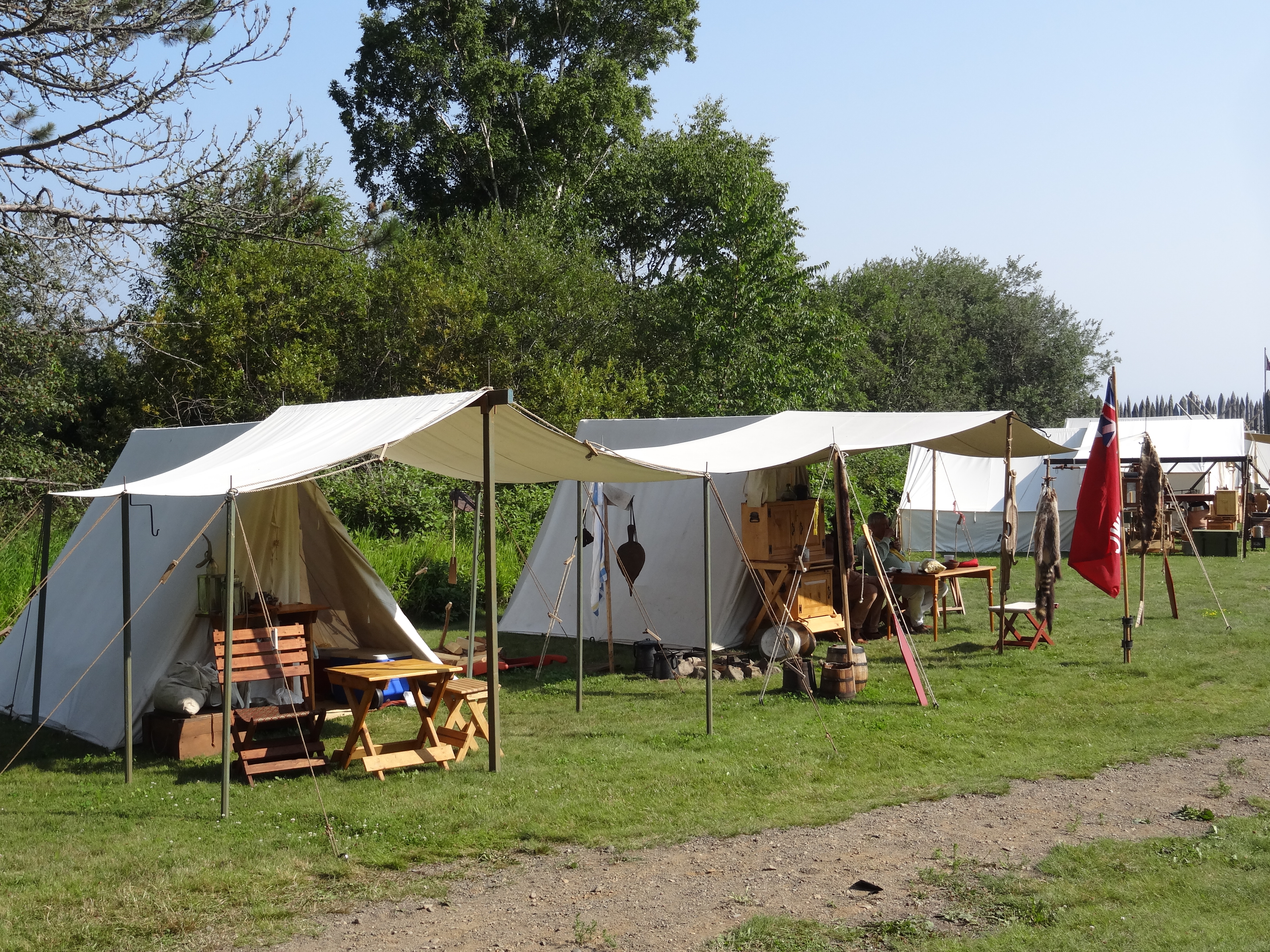
Your first stop should be the Great Hall. Every August, the park holds a big rendezvous, and you can visit with lots of reenactors and people in period costume, etc. It was a lot of fun. It's a great museum.


voyageurs would travel on the Great Lakes on these gigantic canoes.

the stockade surrounding the fort.


Every August, the NPS holds a big rendezvous, and you can visit with lots of reenactors and people in period costumes, etc. It's a lot of fun. They also had some exhibits set up about the native Ojibwe peoples.

its incredible how something seemingly insignificant (hats/fashion) really paved the way for the exploration of the North American continent


beautiful china in the dining hall


large collection of furs


rendezvous camp


Ojibwe wigwams, built out of birch bark


Bonus: head a few miles north of the National Monument to the Canadian border and visit Grand Portage State Park. Here, you can see the spectacular High Falls of the Pigeon River. It's a short hike, only a little over a mile.
Pigeon River. On the other side is the Canadian province of Ontario.


We saw this fox along the trail.


the impressive High Falls of the Pigeon River


For more info on Grand Portage National Monument: https://www.nps.gov/grpo/index.htm