Sunday, July 11, 2021

Hagerman Fossil Beds National Monument


Visited: Feb 2019
Nearby town: Hagerman, ID; Twin Falls, ID

In 1928, a cattle rancher named Elmer Cook discovered some fossils in this region of south-central Idaho, near the small town of Hagerman. The bones looked somewhat like a horse. Cook took the fossils to the US Geological Survey, and they eventually ended up on the desk of James W. Gidley of the Smithsonian Institution.

These bones were determined to be a newly-discovered extinct species of horse. The species was named Equus simplicidens, commonly known as the "Hagerman Horse." This find is widely regarded as the oldest accepted remains of the genus Equus (horse/zebra) in the entire world. Dr. Gidley would lead an excavation in the Hagerman area a year later, and found hundreds of fossilized remains of this horse, all concentrated in one location known as the Hagerman Horse Quarry. 

The Hagerman horse first appeared around 3.5 million years ago (the Pilocene Epoch). The horse was about the same size as today's Arabian Horse (ancient ancestors of the modern horse (like Eohippus) were much smaller, more akin to a dog). It had a straight shoulder and a thick neck, like a zebra, and a short, narrow skull (like a donkey). The Hagerman horse went extinct around 10,000 years ago, as the Ice Age moved in to the grasslands and floodplains and forever changed the North American continent. 

Scientists are unsure why such a large collection of Hagerman Horse are found in this region in Idaho. Some speculate that this was the location of an ancient watering hole, that served as a long-time gathering place for these horses. Others predict that a large group of Hagerman Horse attempted to ford a river and drowned, swept away by the current, and ended up being buried in the soft sand.

The Hagerman Horse is the official state fossil of Idaho. 

Head to the visitor center in Hagerman to see a complete skeleton of the horse.

A new visitor center will be opening in August 2021. There are many other fossilized remains that have been found on these bluffs overlooking the Snake River, such as mastodons, saber-tooth cats, ancient dogs, fish, frog, vole, beaver, and an extinct species of ancient camel that once roamed in North America (Camelops) Spend some time in the visitor center to go through all the exhibits and watch the short video.


Head up to the quarry section (only a couple miles south of Hagerman) and enjoy the views overlooking the Snake River and there are some short trails.


There's also a cool, old bridge near the area. The Owsley Bridge was built in 1920. It is a cantilevered Warren truss bridge, cars are no longer allowed to drive on it. It is a footbridge only.


We need to re-visit once the new Visitor's Center opens up...and visit at a time when it's more green and not quite so cold. 😄

For more info on the monument: https://www.nps.gov/hafo/index.htm

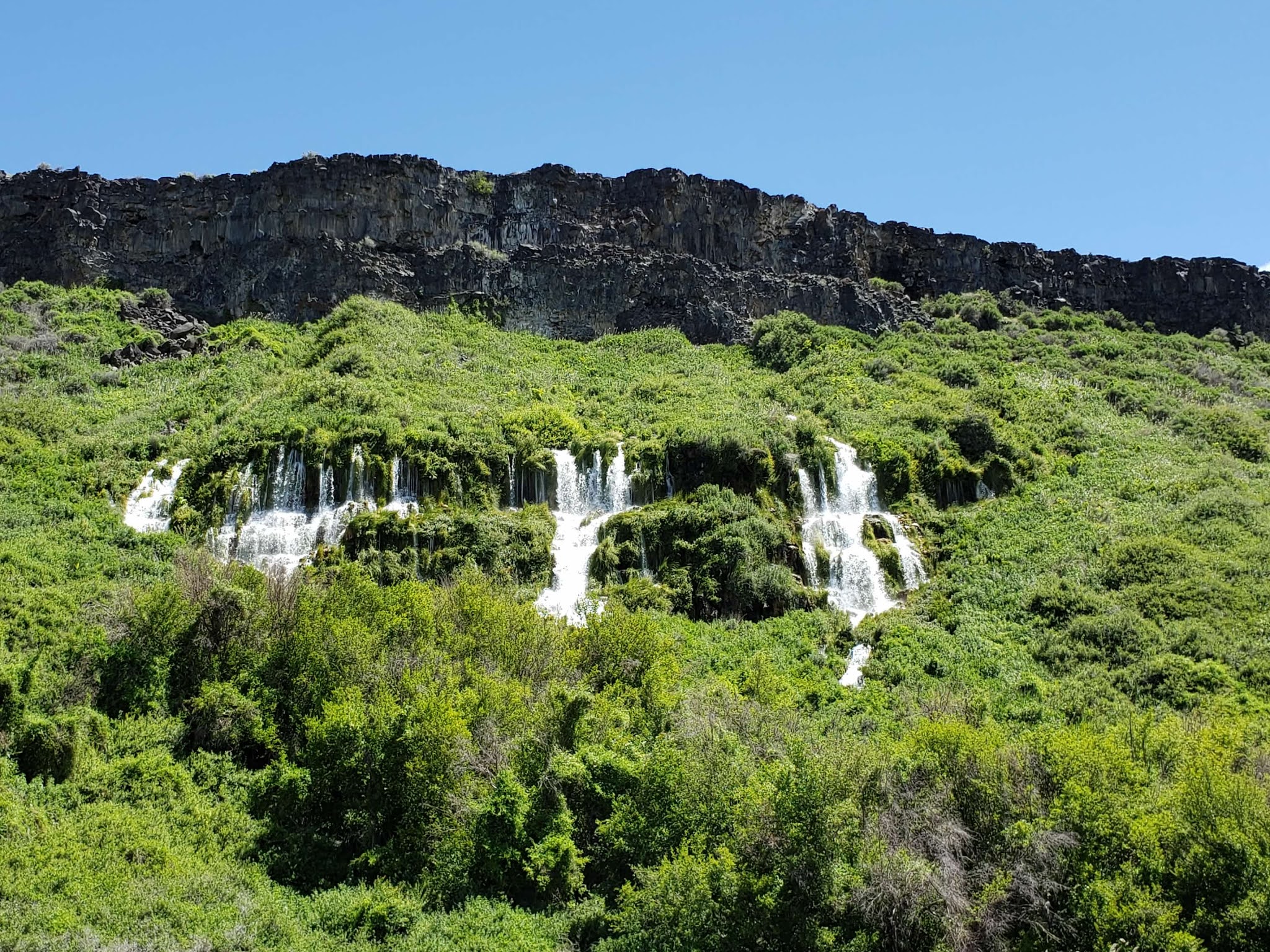
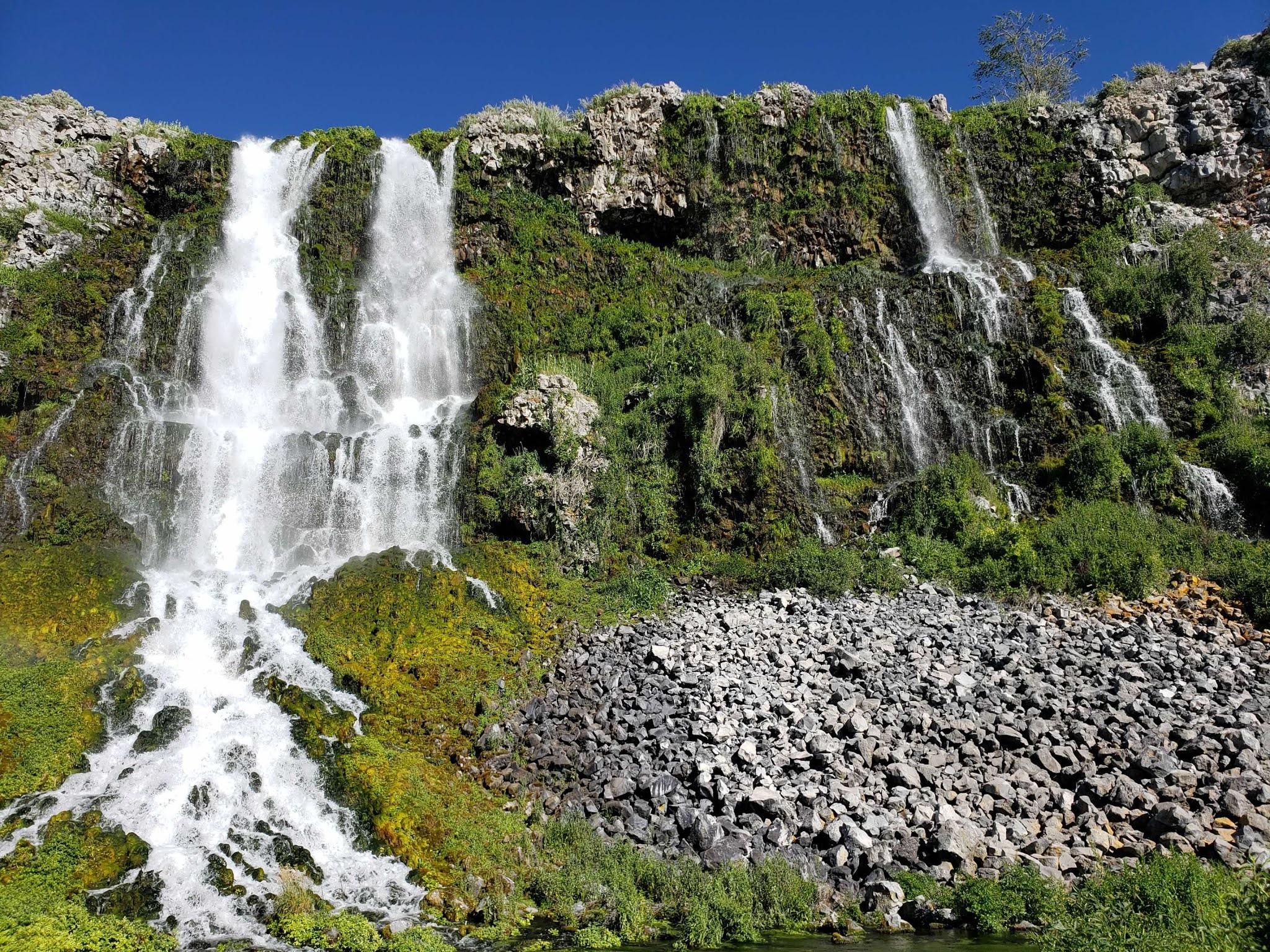
BONUS: take some time and drive the Thousand Springs Scenic Byway between Hagerman and Twin Falls (via Buhl), stop at Thousand Springs State Park. This is a spectacular drive that goes along the Snake River, and you'll see lots of waterfalls (in spring and early summer). These springs come up naturally right out of the ground and cascade down the canyon walls. It's really neat. There's lots of resorts, camping, hiking, and recreational river-use all throughout this area. We spent some time on Ritter Island in June 2019.






Friday, June 25, 2021

Hells Canyon National Recreation Area


Visited: Sept 2018
Nearby town: Baker City, OR; Cambridge, ID

Quick, what's the deepest canyon in the US?

Oh, it's got to be the Grand Canyon, right? 

Nope.

Well...how about Black Canyon of the Gunnison...maybe?

No. Wrong again.

I don't know. What? ... It's Hells Canyon, a deep gorge cut by the Snake River that forms most of the border between Oregon and Idaho. 

At 7,993 ft, Hells Canyon is not only the deepest gorge in the USA, it is also the deepest gorge in all of North America.

Hells Canyon National Recreation Area was established to preserve this remote wilderness in 1975. It is not managed by the NPS, but is instead managed by the U.S. Forest Service. This large area (215,000 acres) is largely inaccessible by road (in fact, no road crosses the canyon), so you're going to need to experience the canyon via boat tour or backcountry trekking.

The Nez Perce lived in this area for generations, and there are some pictographs and petroglyphs along the walls of the canyon that you can still see today. The first whites to explore the area was an expedition led by Wilson Price Hunt, who was seeking a short-cut to the Columbia River. The region was so inhospitable, and the canyon so difficult to navigate, that they were forced to turn back. Gold was discovered in the region in the 1860s, and some people settled near the canyon in 1880s, but the settlements were short-lived. The conditions were simply too harsh, and the location too remote. In May 1887, 34 Chinese miners were killed near Dug Bar settlement, and their gold stolen. This event is now known as the Hells Canyon Massacre. Although 3 members of the murderous gang were eventually brought to trial, they were able to convince the jury that other uncharged gang members were responsible for the miners' deaths, and all 3 were acquitted of the crime.

In 1955, the Idaho Power Company was granted a license to construct three dams along the Snake River in the Hells Canyon region. They are - from south to north - (1) Brownlee Dam; (2) Oxbow Dam; and (3) Hells Canyon Dam. The dams provide Idaho about 70% of its hydroelectric power.    

There are many activites available at the Recreation area, mostly centered around the river: jet boat tours, fishing, kayaking, and whitewater rafting. There are also plenty of opportunities to hunt, camp, and hike as well. 

We visited the Hells Canyon via a jet boat tour run by Hells Canyon Adventures. It was a very good outfit: they fed us a nice lunch, and took us for a great river cruise. The only other family that had reserved for the trip had to cancel, so we had the entire boat to ourselves! They have half-day tours, full-day tours and even overnight tours. It was a lot of fun. It was a beautiful day on the river, and thrilling to go through the rapids (which at the time of year of our visit, early September, are much more calm than normal). We did get a little wet...but in the hot sun we dried off quickly.


Hells Canyon Dam


I think Tara liked the rapids a lot more than I did. 😀


we left our boat at the shore to take a short hike to some petroglyphs.

petroglyphs on the canyon walls.


For more info: https://www.fs.usda.gov/detail/wallowa-whitman/recreation/?cid=stelprdb5238987

BONUS: the day before our boat tour, we spent our time in Baker City, Oregon. Here you will find a major museum all about the Oregon Trail. It's a very good and interesting museum, and you can also see original ruts marking the trail, created by the thousands and thousands of wagons that made their way through this area from the 1830s to the 1870s.
wagon ruts through the sagebrush


Baker is a neat little town full of historical buildings. We stayed at the historic Geiser Grand Hotel.


Baker City from the Oregon Trail museum. The Elkhorn Mountains rise high to the west of town.

Baker Tower, built in 1929. It originally served as a hotel, but now houses a bank, other businesses, and apartments. After its construction, it was the tallest building in Oregon outside of Portland. Today, it is still the tallest building along I-84 between Portland and Boise.


The Geiser Grand Hotel, first opened in 1889, is a jewel of eastern Oregon. Great rooms and a great restaurant.


Geiser Grand hotel.


this historical home was built in the late 1890s by a local judge


Baker County Courthouse


We enjoyed the time we spent in Baker and at Hells Canyon.